manager.hqdentaldesign@gmail.com
© Georgetowntxdentist 2023, All Rights Reserved.
Apr
While charcoal toothpaste can help with surface stain removal, it is not a more effective teeth-whitening agent than ordinary toothpaste. Its effects over time are not known.
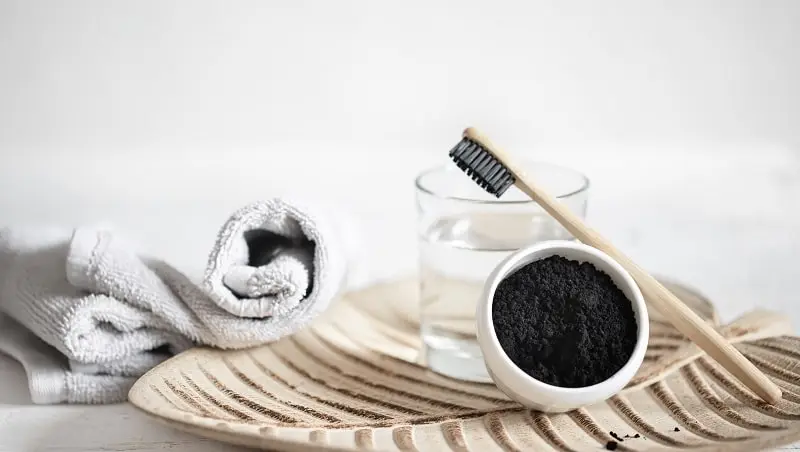
One of the biggest trends in cosmetics and health is charcoal. Commercial face masks and scrubs now feature it as a fashionable ingredient, and some individuals even use it religiously to whiten their teeth.
The fine-grain powder known as activated charcoal, which is included in toothpaste and cosmetic products, is produced by oxidising wood, coconut shells, and other natural materials at extremely high temperatures.
These days, most drugstores and the internet provide a wide variety of charcoal toothpaste options. Because of its great absorption capacity, doctors employ it to draw out and eliminate poisons. Does it, however, work to whiten teeth? Continue reading to find out the advantages and disadvantages of using charcoal toothpaste.
More research is needed to determine the effects of charcoal toothpaste over the long run. According to research, dentists should caution their patients about using charcoal-based toothpaste because of unsubstantiated claims and safety issues. What is now known about charcoal toothpaste is as follows:
Charcoal Toothpaste has the potential to eliminate surface stains. Because of its slight abrasiveness, charcoal can partially absorb surface stains.
However, there's no proof that it works to remove stains from underneath a tooth's enamel or that it has any kind of natural whitening impact.
A teeth-whitening solution must be effective against both surface-level stains and intrinsic stains, or stains that are located beneath the enamel. Certain drugs, excessive fluoride exposure, or underlying medical disorders are some of the causes of intrinsic stains.
There is insufficient scientific data to support teeth whitening as one of activated charcoal's many known advantages.
These are currently the sole advantages of charcoal toothpaste that are known to exist:
Using charcoal toothpaste has the following disadvantages such as
If you want to whiten your teeth, you have a lot of safe and efficient solutions. The American Dental Association (ADA) recommends a number of over-the-counter whitening treatments as alternative possibilities.
Dentists can also provide professional whitening products. Among your choices is:
Seek out teeth-whitening solutions with the ADA stamp of approval, as well as those that include hydrogen peroxide and blue coating. A 2019 study comparing whitening toothpaste and technologies—including activated charcoal—found that these whitening methods are the most successful.
These alternatives are more natural and simple to use, even if they might not be as effective as certain over-the-counter teeth-whitening solutions. Consult a dentist to determine whether any of these alternatives are appropriate for you first:
Despite garnering a lot of interest and media coverage, charcoal toothpaste isn't any more efficient than other toothpaste or over-the-counter whitening solutions.
Due to the small number of trials conducted, the product's long-term effects are yet unknown, however it could help erase surface stains. To find the finest whitening solution for you, consult a dentist.
Automated page speed optimizations for fast site performance
Leave A Comment